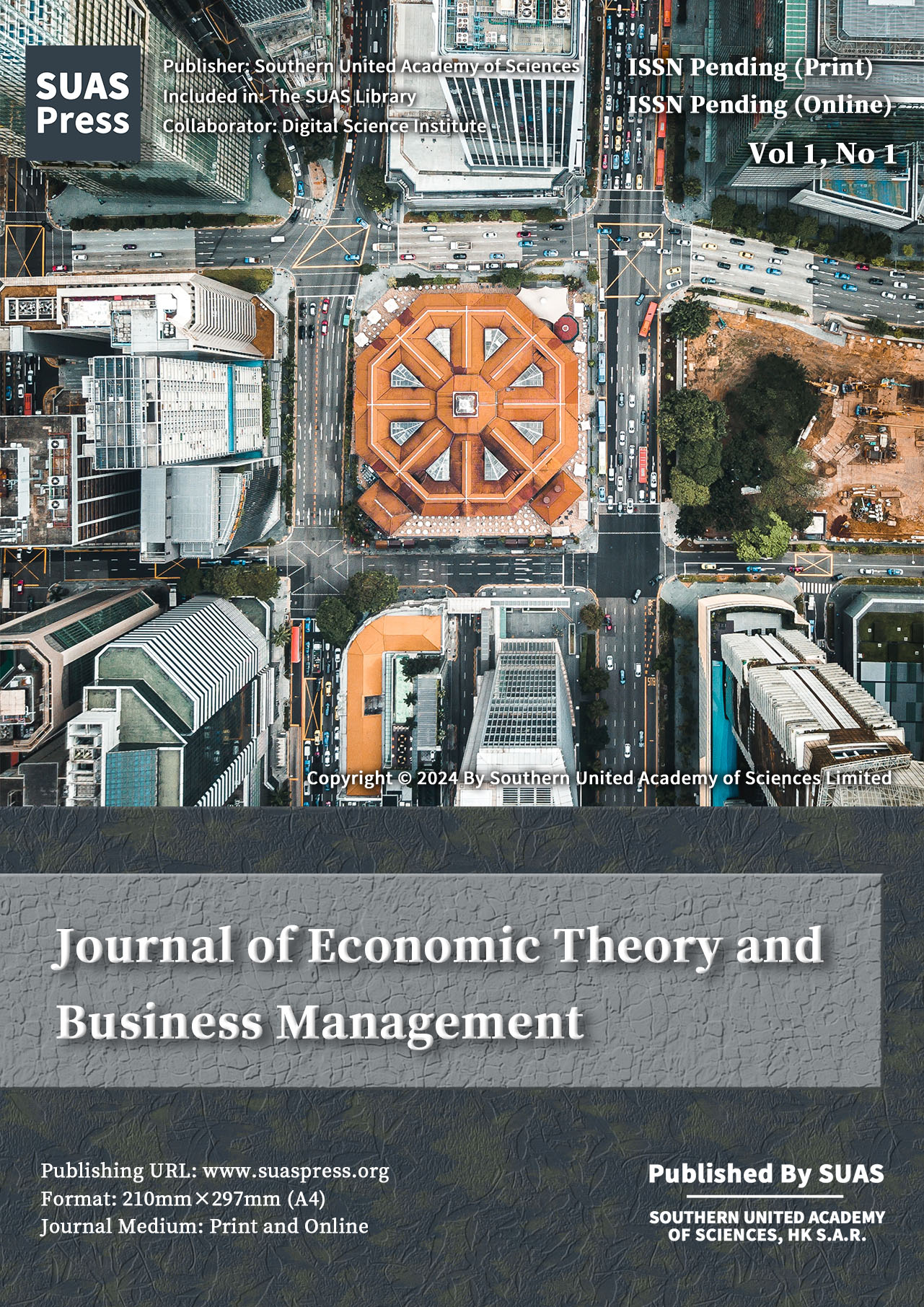
Current Issue

All articles published in this issue have undergone a thorough peer review process, and stringent checks for repetition rates have been implemented to ensure the integrity of the content.

Total number of articles in this issue: 3
Total number of pages in this issue: 21

For inquiries regarding the content of specific articles, please feel free to contact the respective authors via their provided email addresses. For questions related to the journal itself, please reach out directly to SUAS Press.

Year

2025

Volume

2

Number

5

Status

Archived

Published

2025 October 18

Articles

Reinforcement Learning for Prioritizing Anti-Money Laundering Case Reviews Based on Dynamic Risk Assessment

Addressing the challenges of delayed risk assessment and inflexible prioritization strategies in anti-money laundering reviews, this study investigates reinforcement learning approaches for generating dynamic risk-driven prioritization strategies. It details state-action modeling, reward function design, and policy network training methods, while outlining the model's integration into operational workflows. An experimental environment was constructed using real financial review data. Results demonstrate the model's significant advantages in review efficiency and high-risk identification accuracy, showcasing its potential for online deployment and continuous optimization.

DOI10.70393/6a6574626d.333231ARKark:/40704/JETBM.v2n5a01

Artificial Intelligence in Economic Applications: Stock Trading, Market Analysis, and Risk Management

Artificial Intelligence has become a fundamental driver of innovation in economic systems. This article provides an overview of its applications in stock trading, market analysis, and risk management. A systematic review of recent studies identifies the most widely used methods such as neural networks, deep learning, reinforcement learning, and hybrid approaches. This paper examines AI applications in economics, including stock trading, market analysis, and risk assessment. A comprehensive taxonomy is proposed to investigate AI applications in various scopes of the proposed categories. Furthermore, real-world cases illustrate the practical deployment of artificial intelligence in financial institutions and enterprises. The findings suggest that artificial intelligence is a transformative force in the economy but challenges such as data quality, transparency, and regulatory adaptation remain open for future research.

DOI10.70393/6a6574626d.333232ARKark:/40704/JETBM.v2n5a02

Interpretable Automated Machine Learning for Asset Pricing in U.S. Capital Markets

Artificial Intelligence has become a fundamental driver of innovation in economic systems. Traditional asset pricing model face significant limitations in predictive accuracy, interpretability, and robustness under extreme market conditions. Although recent advances in Automated AutoML have improved forecasting performance, their “black-box” nature and fragility during crises limit their practical use in regulatory and policy contexts. This article provides an overview of its applications in stock trading, market analysis, and risk management. A systematic review of recent studies identifies the most widely used methods such as neural networks, deep learning, reinforcement learning, and hybrid approaches. This paper examines AI applications in economics, including stock trading, market analysis, and risk assessment. A comprehensive taxonomy is proposed to investigate AI applications in various scopes of the proposed categories. Furthermore, real-world cases illustrate the practical deployment of artificial intelligence in financial institutions and enterprises. The findings suggest that artificial intelligence is a transformative force in the economy but challenges such as data quality, transparency, and regulatory adaptation remain open for future research.

DOI10.70393/6a6574626d.333233ARKark:/40704/JETBM.v2n5a03

Copyright © 2026 The Author(s). Published by Southern United Academy of Sciences.
This work is licensed under a Creative Commons Attribution 4.0 International License , which permits unrestricted use, distribution, and reproduction in any medium, provided the original work is properly cited.