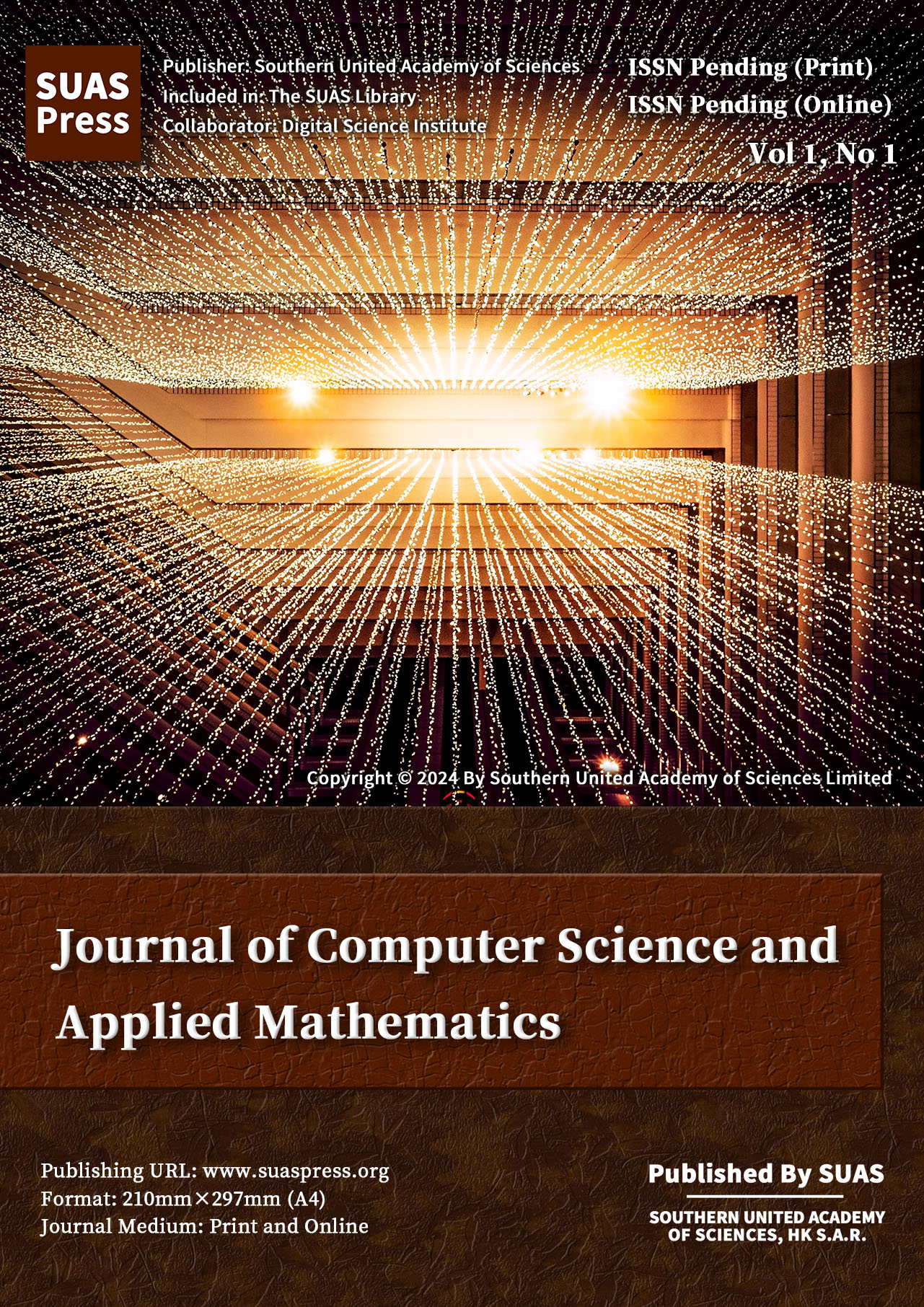
Current Issue

All articles published in this issue have undergone a thorough peer review process, and stringent checks for repetition rates have been implemented to ensure the integrity of the content.

Total number of articles in this issue: 4
Total number of pages in this issue: 30

For inquiries regarding the content of specific articles, please feel free to contact the respective authors via their provided email addresses. For questions related to the journal itself, please reach out directly to SUAS Press.

Year

2025

Volume

2

Number

2

Status

Archived

Published

2025 March 1

Articles

A Comprehensive Review of Artificial Intelligence Applications in Building Information Modeling (BIM) and Future Perspectives

Technologies like Artificial Intelligence (AI), the Internet of Things (IoT), cloud computing, and big data analytics are converging and leading the construction industry to a transformation towards digitization and enhancing construction efficiency. At the centre of this evolution sits Building Information Modeling (BIM), transforming from rudimentary 3D modeling tools to a holistic building lifecycle management tool. This article presents a literature review of AI applications in BIM with a focus on how machine learning, deep learning, reinforcement learning, generative adversarial networks, natural language processing, and computer vision reshape the construction industry. AI has been integrated with BIM to improve project efficiency, minimize mistakes, enhance resource allocation, and transition towards a more sustainable practice. This review also highlights current technical obstacles causing the delay of projects such as the pilot studies based on AI-enhanced BIM in the field and future research directions liaising interdisciplinary infrastructure with IoT, blockchain, augmented reality, etc. The article concludes by discussing the gradual co-evolution of adaptive artificial intelligence systems and BIM, concluding that innovation in sustainable development must always be nurtured.

DOI10.70393/6a6374616d.323635ARKark:/40704/JCTAM.v2n2a01

Sign Language Recognition and Application Based on Graph Neural Networks: Innovative Integration in TV News Sign Language

With the rapid development of information technology, sign language recognition plays an extremely important role in the communication among people with hearing impairments. Especially in the context of television news, the real-time and accuracy of sign language translation are very important. Traditional sign language translation technology faces challenges such as low accuracy of gesture recognition and poor real-time performance, which makes it difficult to meet the translation needs of daily complex news content. This paper proposes a sign language recognition method based on graph neural network (GNN). By constructing a graph structure of gesture nodes and joint connections, GNN can capture the relationship between gestures and efficiently transfer learning information. Through comparative experiments with traditional convolutional neural networks (CNN), the advantages of GNN in sign language recognition are proved, especially in the application of news broadcasting, which significantly improves the real-time and accuracy of sign language translation. Future research will focus on optimizing the generalization ability of the model and broadening its applicability to more languages and scenarios.

DOI10.70393/6a6374616d.323636ARKark:/40704/JCTAM.v2n2a02

Enhancing Video Conferencing Experience through Speech Activity Detection and Lip Synchronization with Deep Learning Models

As video conferencing becomes increasingly integral to modern communication, the need for high-quality synchronization between speech and visual elements is paramount. Speech Activity Detection (VAD) and lip synchronization technologies play crucial roles in ensuring accurate, real-time communication by distinguishing speech signals from noise and aligning lip movements with audio. This paper proposes a novel multimodal fusion approach based on deep learning models that significantly improves the accuracy of speech activity detection and the real-time performance of lip synchronization. Using open datasets such as AVSpeech and LRW, this study showcases the effectiveness of the proposed models in various real-world scenarios, such as multi-party conferences, noisy environments, and cross-lingual settings. Experimental results demonstrate that the LSTM-based VAD model achieves an accuracy of 92%, outperforming traditional methods, while the lip synchronization module ensures seamless audio-visual alignment with minimal delay.

DOI10.70393/6a6374616d.323637ARKark:/40704/JCTAM.v2n2a03

InceptionV3-Based Blood Cell Classification for Cancer Detection

Blood cell morphological analysis plays a vital role in clinical diagnosis, especially in the early detection of leukemia, anemia and other blood system diseases. Conventional image processing techniques are difficult to deal with complex situations such as cell overlap and uneven staining, and basic machine learning methods also have obvious limitations in extracting complex morphological features. Deep learning has shown excellent performance in the field of medical image classification and provides a new technical approach for automated analysis of blood cells. This study aims to develop an efficient and accurate blood cell classification model to assist in the early diagnosis of blood diseases and cancer. By adopting the InceptionV3 network structure and combining the 'Grid Search Enhanced with Coordinate Ascent' hyperparameter optimization method, the study provides a systematic automated classification model training method for blood cell multi-classification tasks. The experiment was based on a dataset containing five types of cells. The results showed that the final model achieved an accuracy of 99.20% on the test set, the AUC of all classes reached 1.00, and the average specificity was as high as 99.80%, providing a reliable technical reference for clinical blood pathology analysis and early cancer screening.

DOI10.70393/6a6374616d.323737ARKark:/40704/JCTAM.v2n2a04

Copyright © 2026 The Author(s). Published by Southern United Academy of Sciences.
This work is licensed under a Creative Commons Attribution 4.0 International License , which permits unrestricted use, distribution, and reproduction in any medium, provided the original work is properly cited.